

Introduction
Starting a business or building a personal brand in Uganda today means one thing is non-negotiable: you need an online presence. And every solid online presence starts with a domain name. Think of it as your home address on the internet. Without it, people simply cannot find you.
Whether you’re launching a new business, a blog, a nonprofit, or a side hustle, registering a domain name in Uganda is one of the first steps you need to take. The good news is that the process is simpler than most people think and you don’t need any technical background to get it done.
In this guide, we’ll walk you through everything you need to know about domain registration in Uganda, from understanding what a domain name is, to choosing the right one, to completing the registration process step by step. If you’re ready to claim your space online, let’s get started.
If you’re also wondering how to get your business online from scratch, check out this helpful guide on how to start an online business in Uganda.
What Is a Domain Name?

A domain name is the unique web address people type into their browser to visit your website. For example, in the URL www.kicowebdesign.com, the domain name is kicowebdesign.com. It’s the digital identity of your business or brand online.
You can think of a domain name like a phone number for your website. Just like people dial your number to reach you on the phone, they type your domain name to reach you on the internet. The only difference is that a domain name is easier to remember and much more professional.
Every domain name has two key parts: the name itself (like “kicowebdesign”) and the extension (like “.com” or “.ug”). Together, they form a complete web address. Once you register a domain name, no one else can use that exact name for as long as you keep it active.
Why You Need a Domain Name in Uganda
Uganda’s digital economy is growing fast. More consumers are searching for products and services online every day. If your business doesn’t have a website with a proper domain name, you’re essentially invisible to a large part of your potential market.
Here’s why registering a domain name matters for your business or personal brand:
• Professionalism: A custom domain name like www.yourbusiness.com or www.yourbusiness.co.ug looks far more credible than a free subdomain from a website builder.
• Brand identity: Your domain name is part of your brand. It tells people who you are and what you do at a glance.
• Better SEO: A good domain name that includes relevant keywords can help your website rank higher on Google.
• Control: Owning your domain means no one can take it away from you or shut it down arbitrarily.
• Customer trust: People are more likely to trust a business with its own domain name and professional email address.
If you’re serious about growing your digital presence Uganda, securing a domain name is the logical first step.
Types of Domain Extensions in Uganda
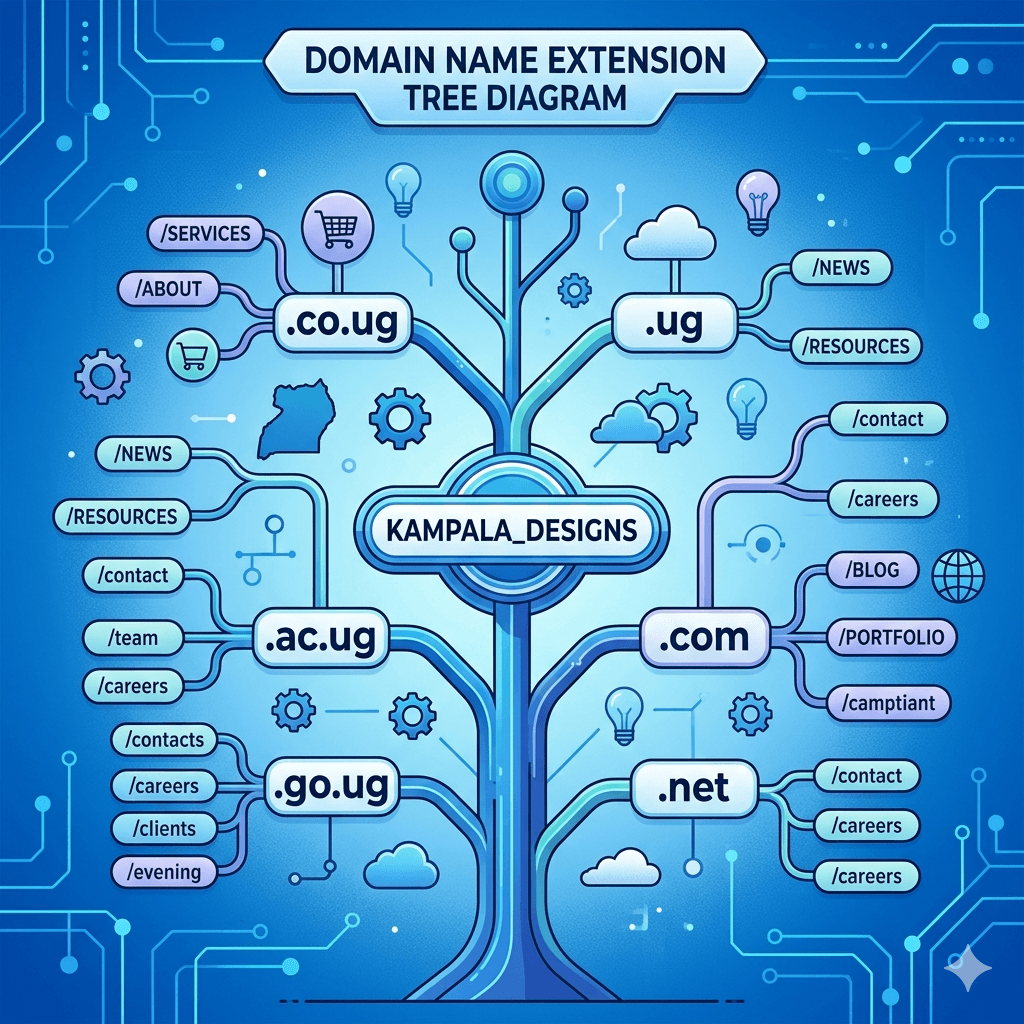
When you buy a domain name in Uganda, you’ll come across several types of domain extensions. Each serves a slightly different purpose, and choosing the right one matters for your brand and SEO strategy.
Country Code Domains (.ug)
The .ug domain is Uganda’s official country code top-level domain (ccTLD). It signals to visitors and search engines that your website is specifically associated with Uganda. If your target audience is primarily in Uganda, a .ug domain extension is a strong choice. It also tends to rank well in local search results.
Second-Level Domains (.co.ug, .ac.ug, .go.ug, etc.)
Under the .ug umbrella, there are several second-level domain extensions that are used for different purposes:
• .co.ug Designed for commercial businesses operating in Uganda. This is the most popular choice for local companies.
• .ac.ug Reserved for academic institutions like universities and colleges.
• .go.ug Used exclusively by government entities.
• .or.ug Intended for organizations and NGOs.
• .sc.ug For schools and educational institutions at the secondary level.
Understanding the difference between .ug and .co.ug will help you pick the one that best fits your purpose.
International Domains (.com, .org, .net)
These are global domain extensions not tied to any country. A .com domain is the most widely recognized and trusted worldwide. If your audience extends beyond Uganda or you have international ambitions, a .com domain makes sense. The .org extension is commonly used by nonprofits and NGOs, while .net is often associated with tech and network-focused companies.
Benefits of Registering a .ug Domain
Choosing a .ug domain registration comes with some real advantages, especially if your business operates primarily within Uganda.
• Local SEO advantage: Google uses the domain extension as one of the signals to determine which region a website is most relevant to. A .ug domain helps your website appear in Ugandan search results.
• Brand relevance: It immediately tells your audience that you are a Uganda-based business, which builds trust with local customers.
• Availability: Because .ug domains are newer and less saturated than .com domains, you’re more likely to find your preferred name still available.
• Credibility: A .ug domain can make your brand appear more established and locally committed.
• Supports the local internet ecosystem: Registering a .ug domain contributes to the growth of Uganda’s digital infrastructure.
If you’re building a business that serves Ugandan customers primarily, a .ug domain is definitely worth considering.
Requirements for Registering a Domain in Uganda
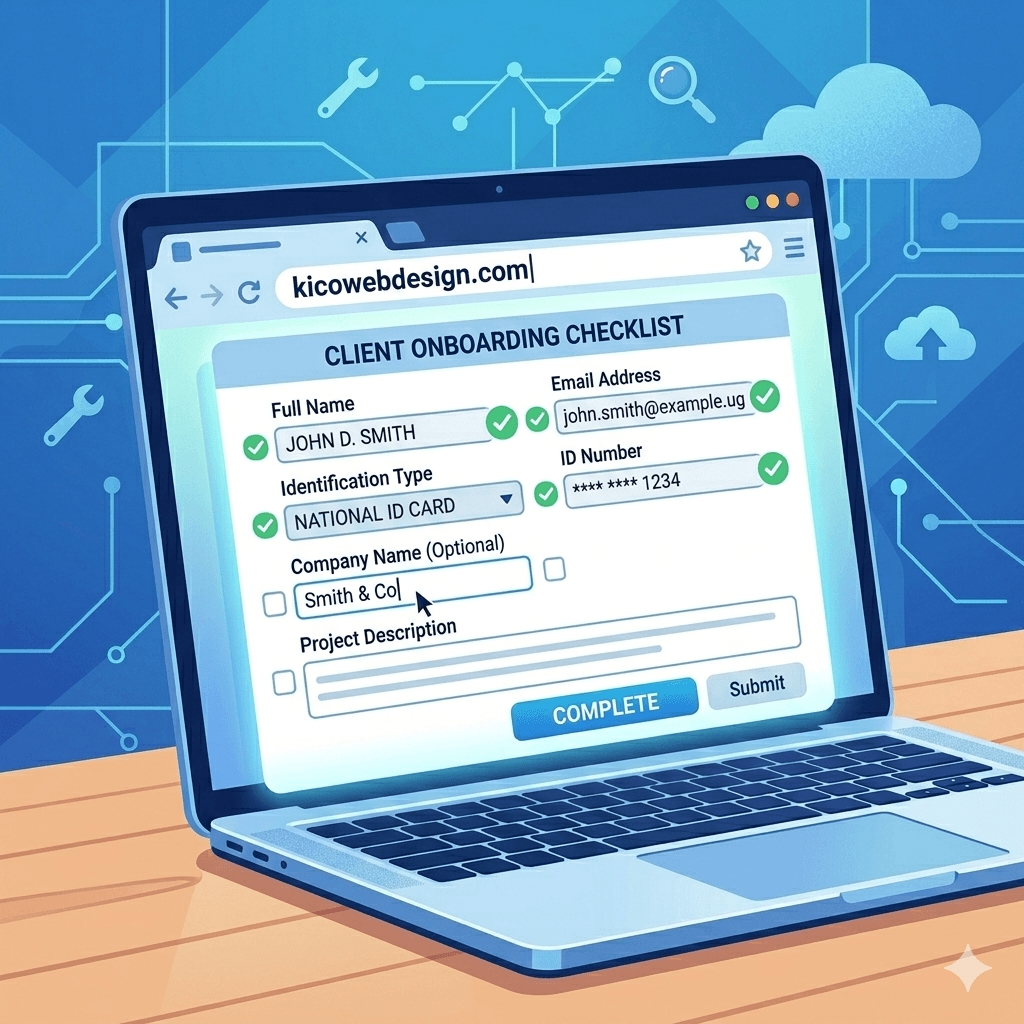
Before you proceed to register a domain name in Uganda, it’s important to know what you need. The requirements vary slightly depending on whether you’re registering as an individual or a business.
Personal vs Business Registration
Individuals can register domain names just as easily as businesses can. You don’t need to be a registered company to own a domain. However, if you’re registering a business domain, having your business registration documents ready is good practice, especially for extensions like .co.ug which are meant for commercial entities.
Required Information and Documents
For most domain registrations, you’ll need:
• Your full name or business name
• A valid email address
• A phone number
• A physical address (for billing and contact purposes)
• Payment method (mobile money, credit/debit card, or bank transfer depending on the registrar)
For second-level domains, some registrars may require additional verification. It’s always a good idea to check with your chosen registrar for their specific requirements before starting the process.
How to Choose the Right Domain Name
Choosing the right domain name is almost like naming your business. Get it right, and it becomes one of your most powerful branding assets. Get it wrong, and it can create confusion and cost you visitors. Here are some practical tips for choosing a domain name for business.
Keep It Short and Simple
A domain name that’s easy to type and remember is worth its weight in gold. Aim for something between 6 and 15 characters if possible. Shorter names are less prone to typos and easier to share verbally. Would you prefer to direct someone to “yourbrand.com” or “youramazingbrand2024.co.ug”? Exactly.
Use Keywords for SEO
Including a relevant keyword in your domain name can give your website a small SEO boost. For example, if you run a bakery in Kampala, something like “kampalachoicebakery.com” signals to both users and search engines what your site is about. For more on this, read our guide on
Avoid Numbers and Hyphens
Numbers and hyphens create confusion. If you tell someone your website is “best-deals-4-you.com”, they may not be sure whether to type the number 4 or the word “for”, or whether to include hyphens. Keep it clean and straightforward.
Make It Brandable and Memorable
The best domain names are unique, catchy, and aligned with your brand personality. Think about big names like Google, Amazon, or Jumia. None of these are dictionary words, yet they’re unforgettable. Try to create something distinct that sticks in people’s minds long after they’ve visited your site once.
How to Register a Domain Name in Uganda (Step-by-Step)
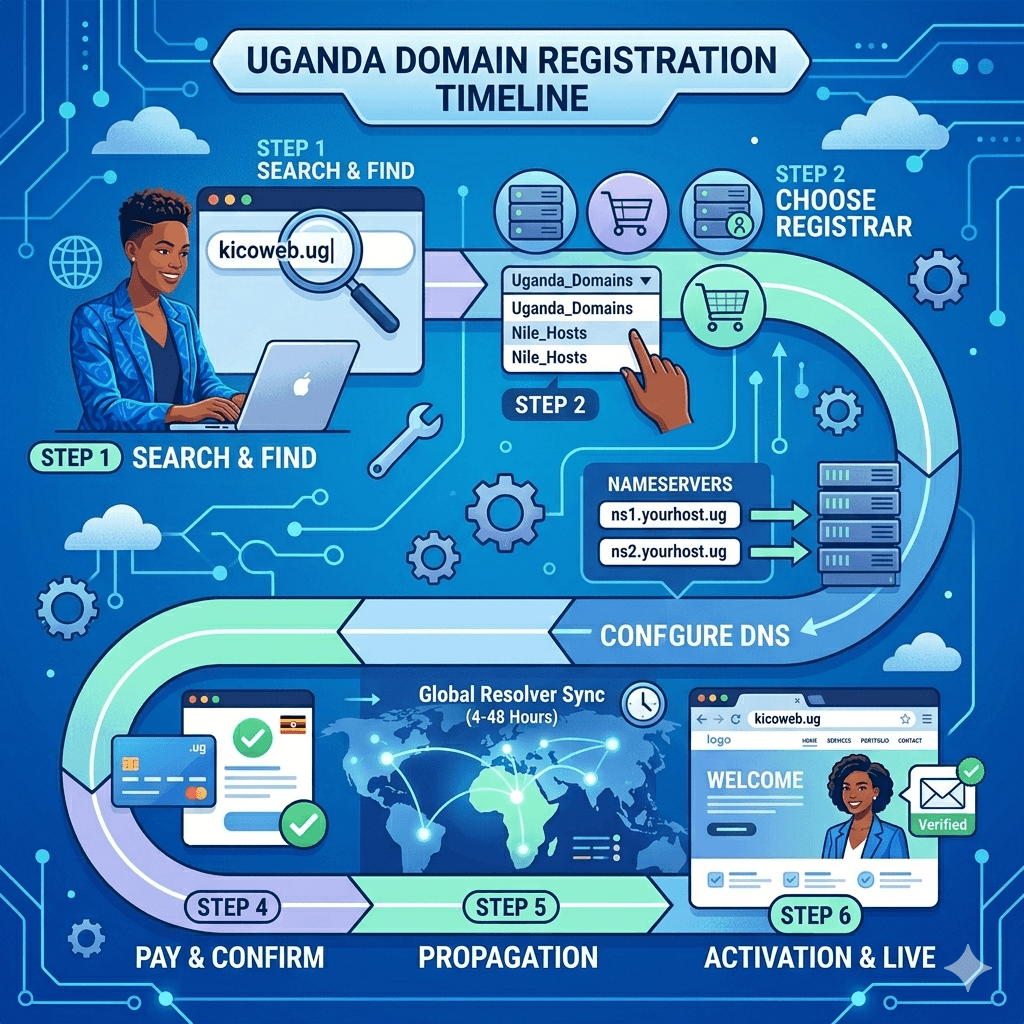
Here’s the part you’ve been waiting for the actual domain name registration process. Follow these steps and you’ll have your domain secured within minutes.
Choose a Domain Registrar
A domain registrar is a company authorized to sell domain names. When looking for the best domain registrar Uganda has to offer, consider factors like pricing, customer support, ease of use, and renewal costs. Some popular registrars you can use in Uganda include:
• REGISTRY.CO.UG the official registrar for .ug domains
• Namecheap great for international domains like .com
• GoDaddy globally known with competitive pricing
• Afriregister focuses on African domain extensions
For .ug domains specifically, registering through REGISTRY.CO.UG or an accredited local registrar is the most reliable route.
Search for Domain Availability
Once you’ve chosen a registrar, use their domain search tool to check if your desired name is available. This is how you check domain availability. Simply type in your preferred name and the tool will tell you instantly whether it’s taken or free. If your first choice is unavailable, the registrar will usually suggest alternatives.
Select Your Domain Extension
Decide whether you want a .ug, .co.ug, .com, or another extension. As discussed earlier, your choice should depend on your target audience and the nature of your website.
Add to Cart and Proceed to Checkout
Once you’ve found an available domain, add it to your cart. At this stage, you may also be offered optional add-ons like web hosting, SSL certificates, or privacy protection. We’ll talk more about what to do after registration shortly.
Provide Registration Details
Fill in your personal or business information accurately. This information goes into a database called WHOIS, which records who owns every registered domain. Make sure your email address is correct; you’ll need it to verify ownership.
Make Payment
Choose your preferred payment method. Many registrars in Uganda accept mobile money (MTN MoMo or Airtel Money), Visa or Mastercard, and sometimes bank transfers. Cheap domain names Uganda can start as low as UGX 60,000 per year for a .co.ug domain.
Verify Ownership and Activate
After payment, check your email for a verification link. Click it to confirm your email address and activate your domain. Once confirmed, your domain is live and officially yours. The whole process typically takes less than 30 minutes.
Cost of Registering a Domain in Uganda
The domain name cost in Uganda varies depending on the extension and registrar you choose. Here’s a rough estimate to guide your budget:
• .co.ug domain: Approximately UGX 60,000 – 120,000 per year
• .ug domain: Approximately UGX 100,000 – 200,000 per year
• .com domain: Approximately UGX 45,000 – 90,000 per year (around USD 10–20)
• .org or .net domain: Similar range to .com
Keep in mind that some registrars offer discounted first-year pricing, then charge the full renewal rate from year two. Always check the renewal price before committing. If you want to understand the cost of building a full website, visit our
Common Mistakes to Avoid When Registering a Domain
Many first-time domain owners make avoidable mistakes that cause headaches later. Here’s what to watch out for:
Choosing Complicated Names
A domain name with unusual spelling, multiple hyphens, or a string of random words is hard to type and even harder to remember. Stick to something clean and intuitive. If you have to explain how to spell your domain name every time you share it verbally, it’s probably too complicated.
Ignoring Renewal Dates
Your domain is only yours for as long as you keep renewing it. Missing your renewal deadline can result in losing your domain sometimes permanently. Set a reminder at least 30 days before your renewal date, or enable auto-renewal with your registrar.
Not Checking Availability on Social Media
Before finalizing your domain name, check if the same username is available on major social media platforms like Facebook, Instagram, and X (Twitter). Brand consistency across platforms matters for building a recognizable online identity.
Registering the Wrong Extension
Choosing the wrong domain extension can confuse your audience. If you’re a government agency registering a .co.ug instead of a .go.ug domain, or a school using .com instead of .sc.ug, it sends mixed signals. Pick the extension that best represents what your organization does.
What to Do After Registering Your Domain
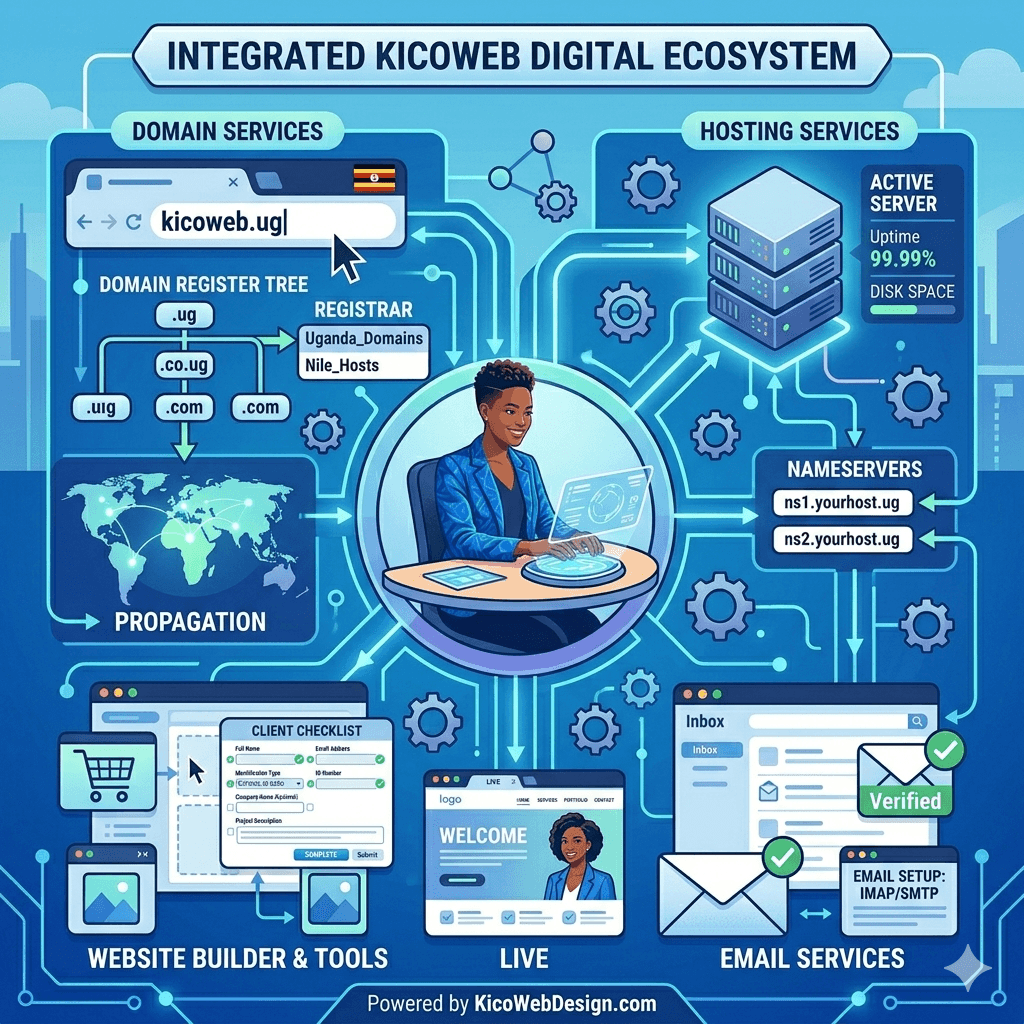
Congratulations! You’ve secured your domain name. But your work isn’t quite done yet. Here’s what to do next to make the most of your new domain.
Connect to Web Hosting
Your domain name is just an address you still need hosting to store your website’s files. Web hosting is like the actual building that sits at your address. Read our guide on
Create a Professional Email Address
One of the best things about having your own domain is the ability to create a professional email address like info@yourbusiness.co.ug. This looks far more credible than a generic Gmail or Yahoo address and strengthens your brand every time you send an email.
Build Your Website
With your domain and hosting in place, it’s time to build your website. If you need expert help, our
Secure Your Domain
Enable domain privacy protection if your registrar offers it. This hides your personal contact details from the public WHOIS database, reducing spam and protecting your privacy. Also make sure your domain registrar account is protected with a strong password and two-factor authentication.
Tips for Managing and Renewing Your Domain
Once your domain is live, here are a few tips to keep it in good shape:
• Enable auto-renewal so you never accidentally let your domain expire.
• Keep your contact details up to date with your registrar, especially your email address.
• Log in to your registrar account at least once every few months to check for any alerts or notifications.
• Consider registering your domain for multiple years upfront many registrars offer discounts for multi-year registrations.
• Lock your domain against unauthorized transfers through your registrar’s control panel.
• If you have a popular brand name, consider registering multiple extensions (.com, .ug, .co.ug) to protect your brand from competitors or domain squatters.
Managing your domain doesn’t have to be complicated. With auto-renewal on and your details current, your domain will keep running smoothly in the background while you focus on growing your business.
Frequently Asked Questions
How long does it take to register a domain in Uganda?
The process is usually very fast. Once you complete payment and verify your email, your domain can be active within minutes to a few hours. In some cases, especially for .ug domains with additional verification steps, it can take up to 24–48 hours.
Can I register a domain without a business?
Yes, absolutely. You don’t need to own a registered business to buy a domain name in Uganda. Individuals can register domain names for personal websites, blogs, portfolios, and more. The only exception is for specific second-level domains like .go.ug (reserved for government) or .ac.ug (reserved for academic institutions).
What is the difference between .ug and .co.ug?
A .ug domain is the country-level extension for Uganda and is very broad in its use. A .co.ug domain is a second-level domain specifically designed for commercial businesses. Both signal that you are Uganda-based, but .co.ug is more appropriate for business websites, while .ug can be used for a wider range of purposes.
How much does a .ug domain cost?
A .ug domain typically costs between UGX 100,000 and UGX 200,000 per year, while a .co.ug domain can start from around UGX 60,000 per year. Prices vary between registrars, so it pays to shop around for cheap domain names Uganda has to offer.
Can I transfer my domain to another registrar?
Yes. If you’re unhappy with your current registrar or find a better deal elsewhere, you can transfer your domain. Most registrars require that the domain has been registered for at least 60 days before a transfer is allowed. You’ll need an authorization code (also called an EPP code) from your current registrar to initiate the transfer.
What happens if my domain expires?
If you miss your renewal date, your domain will enter a grace period (usually 30–90 days) during which you can still renew it often at a higher fee. After the grace period, it may be released back to the public or placed in an auction. In the worst case, someone else could register it and your website address becomes lost to you permanently.
Can I own multiple domain names?
Yes, there’s no limit to how many domain names you can own. Many businesses register multiple versions of their name, different extensions, common misspellings, and related keywords to protect their brand and redirect all traffic to their main website.
Do I need technical skills to register a domain?
Not at all. Registering a domain name is a straightforward process that anyone can complete online, even without any technical knowledge. The step-by-step guide above covers everything you need. If you still feel unsure, you can always
Ready to Build Your Online Presence?
Registering your domain name is just the first step. The real journey begins when you pair it with great web design and solid SEO. At Kico Web Design, we help Ugandan businesses build professional websites that don’t just look good they rank on Google and convert visitors into customers. See examples of websites we’ve built or explore our SEO services in Uganda to take your digital presence to the next level. Have questions? We’re always happy to help.