

Most lists of questions to ask a web designer in Uganda give you a handful of generic questions about price and timeline. Price and timeline matter, but they’re rarely what actually goes wrong. What goes wrong is something nobody asked about upfront: whose name the domain is registered in, what happens to the site if you stop paying a monthly fee, or whether the person who pitched you is the person who’ll build it.
We build websites for Ugandan businesses at Kico Web Design, so we’re not a neutral party, and you should weigh this list with that in mind. We’ve written it the way we’d want a client to question us: grouped by what each question protects you from, with the answer you should hope to hear and the one that should make you pause. Where we mention our own terms, they come from our published pricing page and terms of service, so you can check them. The prices and terms quoted here are ours as of October 2026.
You don’t need to ask all 20 in one meeting. Start with ownership and pricing, since those cause the most damage when they go unanswered.
Key Takeaways
- Ask who owns the domain, hosting and code before price. A site you can’t take with you isn’t really yours.
- Get ownership transfer, payment stages, recurring costs and revision limits in writing. A verbal promise is not a contract.
- Ask for proof, not claims: live sites you can open on your phone, and real speed scores.
- Vague answers on ownership, pricing or exit terms are the biggest warning sign. Not knowing an exact page count is not.
If you haven’t yet decided what you actually need, work through our free website audit checklist first. You’ll ask sharper questions when you know what’s wrong with your current site.
Questions to Ask a Web Designer About Ownership and Access

This is the category most business owners skip, and it has the most painful failure mode. A working website that you don’t control isn’t really yours, so these questions come first.
1. Whose name will the domain be registered in?
It should be your business’s name, with you holding the registrar login. If the agency registers it under its own account “for convenience”, it controls your web address and can hold it hostage in a dispute. Our guide to registering a domain in Uganda shows how simple it is to do yourself.
Red flag: The agency insists on keeping the domain with no written handover plan.
2. Who holds the hosting account, and will I get the login?
Hosting can sit in your name or in the agency’s, but either way you should be able to see where the site lives, what it costs and when it renews.
Red flag: “You don’t need to know that, we handle it.”
3. Will I get admin access to the CMS?
You should be able to edit text, add pages and publish blog posts without paying for every change. On WordPress that means an administrator account, not a limited “editor” login.
Red flag: Every small edit requires a paid support ticket.
4. Do I own the design and code once I’ve paid in full, and is that in writing?
Payment alone doesn’t automatically transfer ownership of custom work, so ask for a written clause that says when ownership passes to you. Ours is in our terms of service: on full payment you receive the custom design files, code and content created for your project, as set out in your project agreement. We keep our own tools, frameworks and libraries, and third-party themes, plugins, fonts and stock images stay under their own licences. Those carve-outs are normal. Other agencies’ terms will differ, and this is not legal advice, so have a lawyer read anything high-stakes.
Red flag: The contract says nothing about ownership, or the agency “retains all rights”.
5. What happens to my site if I stop paying a monthly fee or leave?
If your site would live on the agency’s own platform for a monthly fee, find out what happens when you stop paying. Ask exactly what you can export (files, database, content) and how long it takes. You should be able to take the site to another host.
Red flag: Leaving means rebuilding from scratch.
Pricing and Contracts: What You’ll Actually Pay

A low quote is only low if it’s complete. These questions surface the costs that appear after you’ve signed.
6. What exactly is included in the quoted price?
Ask for a written scope: number of pages, design rounds, forms, SEO setup, content entry, training and launch. Our own packages start at UGX 900,000 (Starter), UGX 1,800,000 (Business) and UGX 3,500,000 (E-commerce), and each lists what’s in it. Whoever you hire should do the same. For a market-wide view of what to expect, see how much a website costs in Uganda.
Red flag: A single lump-sum number with no breakdown.
7. What will I pay every year after launch?
A site has running costs, and they differ between agencies, so ask for them in writing. For reference, ours are: domain renewal of UGX 50,000 to 100,000 a year, hosting of UGX 150,000 to 500,000 a year depending on the plan and traffic (some packages include the first year), and optional maintenance plans from UGX 150,000 a month, as listed on our pricing page. Free support after launch runs from one to six months depending on the package. Ask any agency which of these costs are mandatory and when they start.
Red flag: Recurring fees are “to be discussed later”.
8. How are payments staged?
A deposit up front is common, because the agency commits time before you’ve paid for results. Ours is 50% to start, with the balance due before launch, and larger projects can add milestone payments or split into two to four instalments. Ask what each payment is for, and ideally tie later payments to delivered work rather than to a date.
Red flag: 100% upfront, or payments that aren’t tied to anything specific.
9. What does a change cost after you’ve started?
Scope changes are fair to charge for, but the rate should be known. Ask how a change request is quoted and how long it takes to approve, so a small tweak doesn’t turn into a negotiation.
Red flag: No change process at all, or “we’ll see”.
10. What are the refund and exit terms?
Be realistic: once design and development work is done, it can’t be un-done, so most agencies limit refunds. Ours is straightforward: the deposit (typically 50%) is non-refundable once work starts, because it covers planning, research, setup and preliminary design. If you cancel before any work has started and before we’ve incurred any costs, we refund the deposit minus a 10% administrative fee, and deduct any third-party costs already paid. If both sides agree to end a project, unused funds may be refunded after deducting the value of work done and costs incurred. The full text is in our refund policy. Whichever agency you choose, get the equivalent in writing before you pay a deposit.
Red flag: No written policy, or terms that only run one way.
Process and People: Who Does the Work and How
Once the money and ownership questions are settled, these four questions tell you how the project will actually run.
11. Who will actually build my site?
The person who pitched you and the person who builds your site can be different people, and some work can be outsourced. That’s not automatically bad, but you should know who is accountable. Ask to meet or speak to the person doing the work.
Red flag: You can’t find out who is building it.
12. What’s the timeline, and what could delay it?
On our published pricing, a Starter site typically takes two to three weeks, a Business site three to four, and an online store four to six, including revisions. Our terms list timely content and feedback from the client as one factor in delivery dates, and a good agency will tell you what it needs from you and by when.
Red flag: A fixed date promised with no mention of your own inputs.
13. How many revision rounds do I get?
Unlimited revisions sound generous but can mean an endless project. A defined number of rounds, with a clear approval step, keeps both sides moving. Ours are set in the proposal, typically two to three rounds, and extra rounds are billed at our hourly rate or as quoted. Ask any agency what counts as a revision versus a new request.
Red flag: “Unlimited revisions” with no sign-off process.
14. Who is my point of contact, and how fast do you reply?
Ask which channel they use (WhatsApp, email, calls) and what response time to expect. We typically respond to new enquiries within 24 hours, and our terms set a formal response time of two business days for project requests. Whatever an agency promises, test it before you sign, because slow replies while they’re trying to win you rarely speed up once you’ve paid.
Red flag: Slow, vague replies before you’ve even signed.
Mobile, Speed and SEO: Whether the Site Will Perform
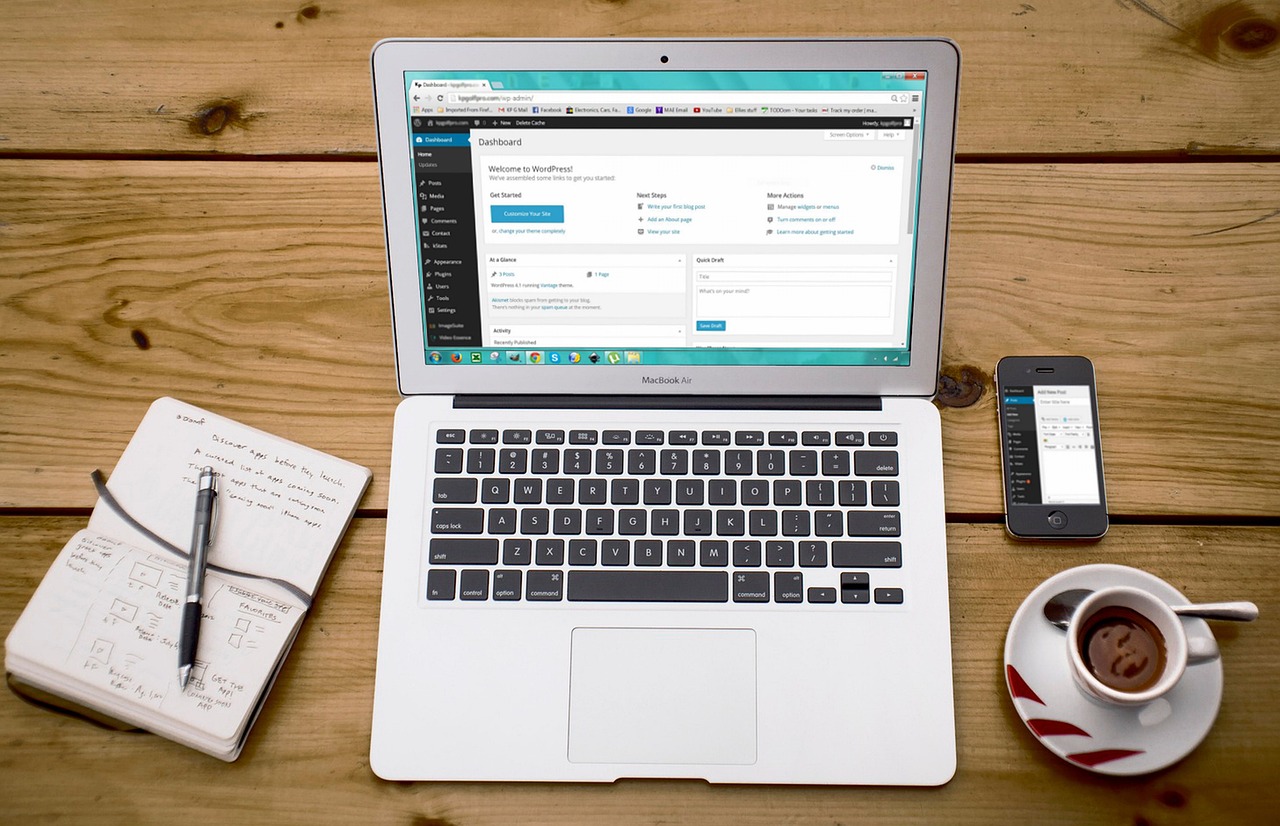
Your site has to work well on a mid-range phone on a mobile network, not just on the designer’s laptop. Whatever an agency tells you about its process, make it prove that on a real phone before you sign.
15. Do you design for phones first?
Ask to open two or three of their live sites on your own phone, on mobile data, in front of you. Look at how fast the page appears, whether the text is readable without zooming and whether buttons are easy to tap.
Red flag: Their portfolio only exists as desktop screenshots.
16. What speed standard do you commit to?
Google’s published “good” thresholds for Core Web Vitals are Largest Contentful Paint of 2.5 seconds or less, Interaction to Next Paint of 200 milliseconds or less and Cumulative Layout Shift of 0.1 or less, measured at the 75th percentile of real visits (web.dev). A good agency can talk about these without prompting.
Red flag: “We make fast websites” with no numbers behind it.
17. What SEO is included, specifically?
“SEO included” can mean anything from a title tag to a full strategy. Ask for the list: page titles and descriptions, image alt text, site structure, mobile and speed work, schema markup, Google Business Profile setup. Ongoing SEO, such as monthly content and link building, is normally a separate service, and you should know what it costs.
Red flag: Guaranteed first-page rankings. No one controls Google’s results.
18. Can I see results from your past sites?
Ask for live URLs and, ideally, a client you can speak to. Screenshots are easy to fake or cherry-pick. Live sites you can test yourself are not. You can see some of ours on our portfolio.
Red flag: No live links, or “all our clients are confidential”.
After Launch and Legal: What Happens Next
19. What support, backups and security are included once the site is live?
Websites get hacked, plugins break and hosting fails. Ask how long free support lasts, what the monthly maintenance covers and who restores the site if something breaks. Backups should exist outside the live server.
Red flag: “The site doesn’t need maintenance.”
20. How will you handle data privacy and Uganda’s data protection rules?
Contact forms, newsletter sign-ups and checkout pages all collect personal data. Uganda’s Data Protection and Privacy Act, 2019 provides for a data protection register kept by the Personal Data Protection Office (Section 29 is headed “Data protection register” in the Act’s text). Eagle Online reported in August 2026 that more than 500,000 Ugandan organisations collect personal data without having registered. Check the current registration requirement with the PDPO before you rely on this. A web designer isn’t your lawyer, but they should know the basics, add a privacy notice and consent wording to forms, and tell you honestly what is outside their scope.
Red flag: They’ve never heard of it, or say “that doesn’t apply to websites”.
How to Score the Answers
After the meeting, put each agency’s answers side by side. Here is how to read them.
| Topic | A good answer | A warning sign |
|---|---|---|
| Domain and hosting | In your name, you hold the logins | Kept in the agency’s account |
| Code and design | Ownership passes to you on full payment, in writing | Silent contract, or agency “retains all rights” |
| Pricing | Itemised scope, known recurring costs | One lump sum, costs “discussed later” |
| Payments | Staged against milestones | All upfront, or tied to nothing |
| People | You know who builds it | Unclear or hidden |
| Speed and mobile | Live sites you can test; Core Web Vitals discussed | Only desktop screenshots |
| After launch | Defined support, offsite backups | “No maintenance needed” |
Not knowing an exact number, such as the precise page count, isn’t a problem. Being unable or unwilling to answer clearly on ownership, pricing or exit terms is.
Web Designer Questions: Quick Answers
What questions should I ask a web designer in Uganda?
Ask about five things: ownership (domain, hosting, code), pricing and recurring costs, who builds the site and how the process runs, mobile speed and SEO, and what support you get after launch. Get the answers in writing, and treat vague replies on money or ownership as the real warning sign.
How many of these questions should I ask in one meeting?
You don’t need all 20 in order. Cover ownership and pricing (questions 1 to 10) first, since those cause the most damage when unanswered. Raise process, performance and SEO once you’re seriously considering a specific agency.
What if an agency can’t answer some of these confidently?
It depends which ones. Missing a detail like exact page count is fine. Being unclear on ownership, pricing or what happens if you end the relationship is worth taking seriously. Ask them to follow up in writing and see how they respond.
Should I ask a web designer for references?
Yes. Ask for live websites you can test and, if possible, a past client to speak to. A short call with someone who has been through a project tells you more than any portfolio page.
Is the cheapest web designer in Uganda usually the worst choice?
Not automatically, but compare like with like. Put every quote against the same scope and the same recurring costs, because a cheap build with expensive recurring fees can cost more over three years than a higher upfront price.
Which Questions Matter Most Before You Sign
The best questions to ask a web design company in Uganda are the ones about ownership, money and exit terms, because those are the hardest to fix after you’ve signed. A good agency will be glad you asked, and will already have clear answers. If you want to test us the same way, talk to Kico Web Design and bring this list.