

1. Introduction
If you’ve ever tried to find a reliable web designer in Uganda, you know how overwhelming the search can get. There are dozens of options spread across different cities, each with its own strengths, pricing, and working style. Whether you’re launching a new business or giving your existing website a much-needed upgrade, the city where your designer is based can make a real difference.
Three cities dominate Uganda’s web design conversation: Kampala, Entebbe, and Jinja. Kampala is the commercial heartbeat of the country. Entebbe is a quieter hub with a growing tech presence. Jinja is emerging as a creative and entrepreneurial hotspot. But which one has the best web designers for your specific needs?
This article breaks it all down the strengths, weaknesses, costs, quality levels, and ideal use cases for each city. By the end, you’ll know exactly where to look and what to ask for.
2. What Makes a Great Web Designer?
Before we compare cities, let’s get clear on what separates a great web designer from an average one. It’s more than just knowing how to build a website. A truly skilled designer brings together several core qualities.
First, technical skill matters. A strong web designer should be comfortable working with platforms like WordPress, Shopify, or custom-coded solutions. They should understand HTML, CSS, and at least basic JavaScript.
Second, design sense is critical. Good designers understand layout, color psychology, typography, and user experience (UX). They build websites that don’t just look nice, they guide visitors toward action.
Third, SEO awareness is non-negotiable in today’s digital landscape. The best web designers in Kampala and across Uganda know that a beautiful website with no search visibility is essentially a billboard in a forest.
Fourth, communication skills matter enormously. A designer who listens well and keeps you updated is worth far more than a technically brilliant one who goes silent for weeks.
Finally, reliability and after-launch support set professionals apart from hobbyists. Great designers deliver on time, stay within budget, and offer ongoing maintenance.
3. Why Location Matters in Choosing a Web Designer
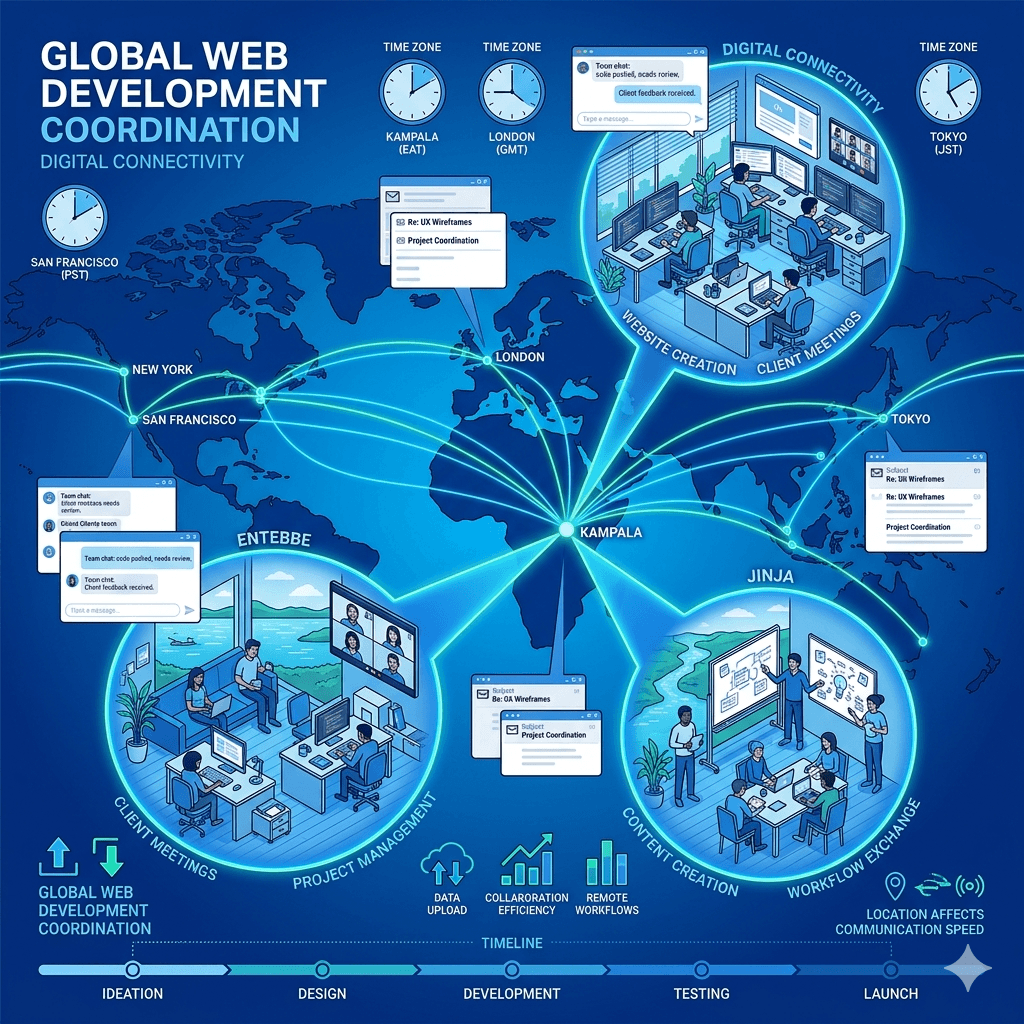
You might wonder: in the age of Zoom and WhatsApp, does location really matter? Honestly, yes more than many people expect.
When your web designer is based nearby, in-person meetings become possible. That matters for businesses with complex requirements, specific brand guidelines, or frequent revision cycles. Face-to-face conversations reduce miscommunication and speed up approval processes.
Location also influences pricing. Designers operating from Kampala’s high-cost commercial zones may charge more than those based in Entebbe or Jinja, even for similar skill levels. Understanding this pricing geography helps you get better value.
There’s also the question of local market knowledge. A web designer who lives and works in your city understands local customer behavior, local competitors, and the unique digital landscape of your market. That context translates into smarter design decisions.
And finally, support and accountability improve with proximity. If something breaks on your website at a critical time, a local designer is easier to reach and has more incentive to respond quickly than a remote freelancer with no local reputation at stake.
4. Overview of Web Design in Uganda
Uganda’s web design industry has matured considerably over the past decade. What was once dominated by a handful of agencies in Kampala has expanded into a dynamic ecosystem of freelancers, boutique studios, and full-service digital agencies spread across multiple cities.
Website design services in Uganda now cover everything from basic brochure sites to complex e-commerce platforms, custom web applications, and SEO-optimized content sites. The demand has been driven by a growing entrepreneurial culture and the rapid adoption of smartphones and mobile internet.
According to digital market observers, more Ugandan businesses are investing in professional online presence as competition increases, especially in sectors like retail, hospitality, education, and professional services. This demand has attracted a new generation of skilled web developers in Uganda who are trained, creative, and internationally aware.
The three cities covered in this article Kampala, Entebbe, and Jinja represent distinct segments of this growing market. Understanding each city’s unique digital culture helps you make a smarter hiring decision.
5. Web Designers in Kampala: Strengths and Weaknesses

Kampala is Uganda’s largest city and its undisputed commercial capital. It’s no surprise that it hosts the highest concentration of web designers in Uganda. From large agencies with dedicated teams to talented freelancers working from co-working spaces, the options are vast.
If you want to see what skilled Kampala designers are capable of producing, you can browse through some excellent website examples from top Uganda businesses.
5.1 Strengths of Kampala-Based Designers
• Diverse talent pool: Kampala has the largest number of best web designers in Kampala available for hire, from entry-level freelancers to senior developers with years of experience.
• Agency-level expertise: Several web design agencies in Kampala Uganda offer end-to-end services including strategy, design, development, SEO, and digital marketing under one roof.
• Competitive market: Because competition is high, Kampala designers tend to be up-to-date with trends, tools, and client expectations.
• Wide industry exposure: Working in Uganda’s business capital means these designers have served clients across industries, giving them broad problem-solving experience.
• Infrastructure and connectivity: Better internet infrastructure in Kampala enables faster file transfers, video calls, and quicker project turnaround times.
5.2 Weaknesses of Kampala-Based Designers
• Higher prices: The cost of living and doing business in Kampala pushes design rates up. Some website designers in Kampala charge premium rates regardless of the project size.
• Inconsistent quality: The large number of providers means quality varies wildly. Not every designer who markets themselves as a professional has the portfolio to back it up.
• Overextended agencies: Larger agencies often juggle many clients at once, which can mean slower communication and less personalized attention for smaller projects.
• Traffic and logistics: Arranging in-person meetings in Kampala can be frustrating due to traffic congestion, especially in central business areas.
6. Web Designers in Entebbe: Strengths and Weaknesses
Entebbe sits about 40 kilometers from Kampala, along the shores of Lake Victoria. Known primarily for its airport and relaxed atmosphere, Entebbe is quietly building a reputation as a growing base for freelance web designers and small digital studios.
Many entrepreneurs and businesses in Entebbe serve the tourism, hospitality, and export sectors industries that often require sophisticated, visually compelling websites. This demand has shaped a local design community with a specific flair for high-end digital experiences.
6.1 Strengths of Entebbe-Based Designers
• Niche expertise: Entebbe web designers often specialize in hospitality, tourism, and lifestyle brands, giving them strong visual sensibilities for those sectors.
• More competitive pricing: Affordable web design in Uganda is more accessible in Entebbe, where overhead costs are lower than in Kampala.
• Closer client relationships: With a smaller client base, Entebbe designers typically offer more personalized service and greater responsiveness.
• Quieter work environment: Less urban pressure often means more creative focus and timely project delivery.
6.2 Weaknesses of Entebbe-Based Designers
• Smaller talent pool: The overall number of web designers in Entebbe is significantly smaller, which limits your choices, especially for specialized technical projects.
• Limited agency options: Most providers in Entebbe are freelancers or very small teams. Comprehensive agency-level services are harder to find locally.
• Possible capacity issues: Smaller operations may struggle with tight deadlines or multiple concurrent projects.
• Less exposure to competitive industries: Designers based exclusively in Entebbe may have less experience with fast-paced sectors like fintech, e-commerce, or corporate services.
7. Web Designers in Jinja: Strengths and Weaknesses
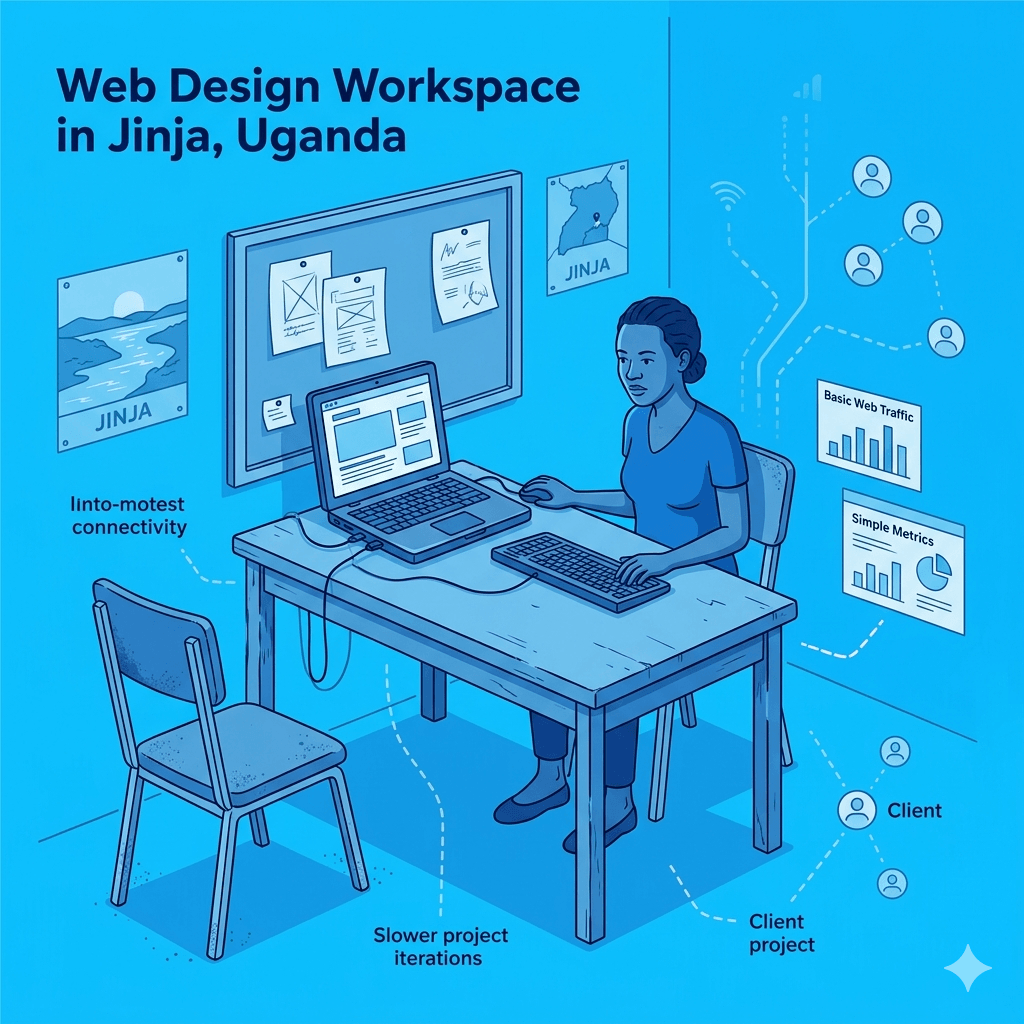
Jinja is Uganda’s third-largest city and an increasingly vibrant hub for tourism, small business, and youth entrepreneurship. It has attracted a wave of young, digitally savvy creatives, many of whom have built skills through online training platforms and international remote work experience.
Website designers in Jinja Uganda bring a fresh, modern energy to the field. They’re often self-taught digital natives who stay current with global design trends while keeping their rates accessible for local businesses.
7.1 Strengths of Jinja-Based Designers
• Creative and innovative: Jinja’s emerging creative culture means designers there tend to bring fresh perspectives and bold design choices.
• Affordable rates: Web design costs in Jinja are generally the most affordable of the three cities, making them ideal for startups and small businesses.
• International exposure: Many Jinja-based designers have worked with international clients through platforms like Upwork or Fiverr, raising their quality standards.
• Quick adoption of new tools: Younger designers in Jinja are often early adopters of emerging design and development tools, which can benefit clients looking for modern solutions.
7.2 Weaknesses of Jinja-Based Designers
• Varying experience levels: The Jinja design scene includes many talented newcomers but also inexperienced beginners. Due diligence in portfolio review is essential.
• Fewer established agencies: Full-service digital agencies are rare in Jinja. Most providers are independent freelancers or very small teams.
• Internet reliability: Connectivity in some parts of Jinja can be inconsistent, occasionally affecting turnaround times and communication.
• Limited industry specialization: Jinja website developers may have less exposure to complex corporate, legal, or financial industry requirements.
8. Cost Comparison: Kampala vs Entebbe vs Jinja
Cost is usually the first question people ask. And fair enough budget matters. But understanding what drives pricing in each city helps you avoid the trap of choosing the cheapest option at the expense of quality. For a detailed breakdown of what you should expect to pay, check out our guide on website cost in Uganda.
8.1 Average Pricing in Each City
Kampala: A basic business website from a professional designer typically ranges from UGX 1,500,000 to UGX 4,000,000. Full-service agency projects can go significantly higher, especially for e-commerce or custom web applications.
Entebbe: Expect to pay between UGX 1,000,000 and UGX 3,000,000 for a similar scope. Affordable web design in Entebbe is possible without compromising on visual quality, especially for hospitality or service businesses.
Jinja: Rates in Jinja tend to start lower, with many freelancers offering complete websites from UGX 700,000 to UGX 2,500,000. This makes it the most budget-friendly option overall.
8.2 Factors That Affect Pricing
Regardless of city, several factors push website design prices in Uganda up or down:
• Number of pages: A 5-page site costs far less than a 20-page site with custom functionality.
• E-commerce requirements: Adding a shopping cart, payment gateway, and product management system significantly increases cost.
• Custom vs template design: Custom-designed websites are more expensive but offer unique branding. Template-based designs are faster and cheaper.
• SEO setup: Proper on-page SEO optimization adds to the cost but pays for itself in organic traffic over time.
• Revisions and project scope: Well-defined scopes with limited revisions keep costs predictable.
• Ongoing maintenance: Monthly retainers for hosting, updates, and security monitoring add to your long-term investment.
9. Quality and Expertise Comparison
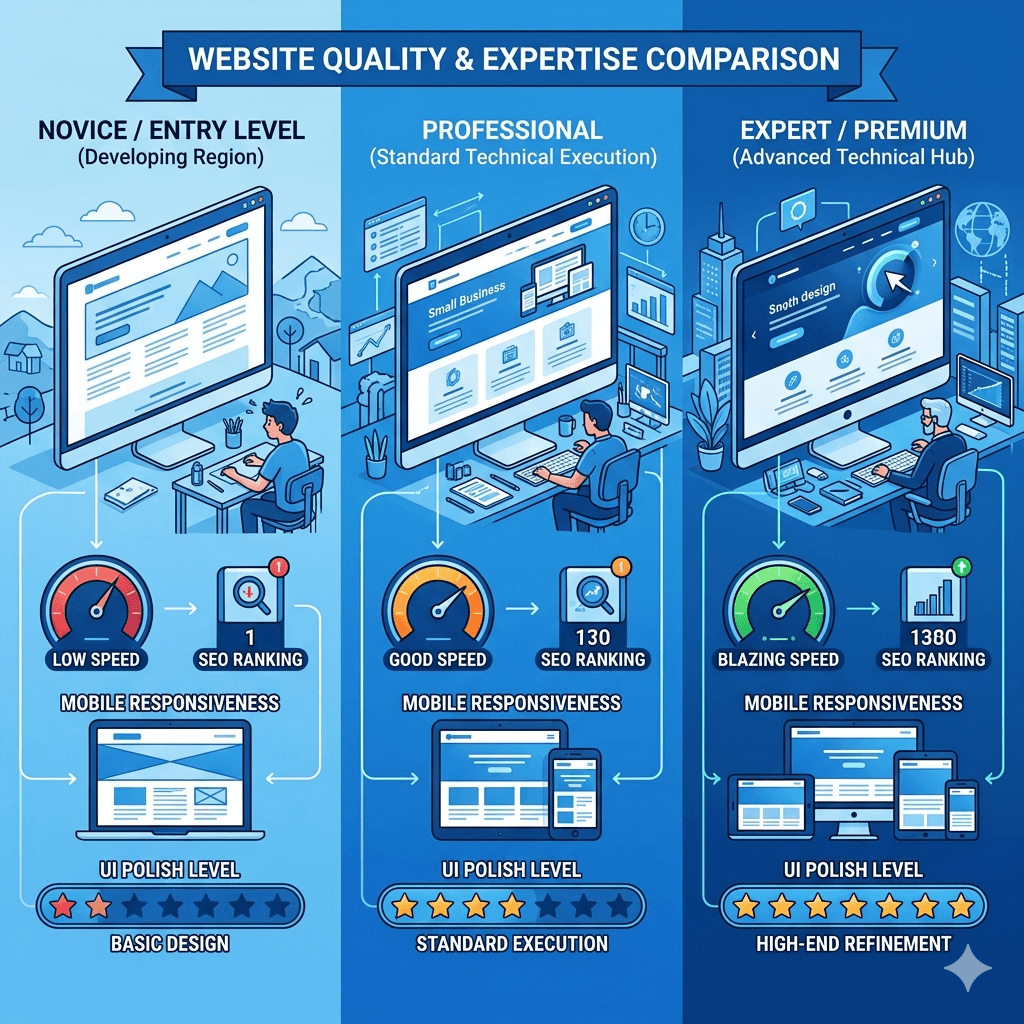
Price is one thing. Quality is another. Fortunately, the two don’t always go hand in hand in Uganda’s web design market. Skilled designers exist at every price point if you know how to look.
9.1 Experience Levels
Kampala has the highest concentration of experienced professionals, particularly those who have worked with large corporations, NGOs, and international clients. Entebbe designers often have specialized experience in specific niches. Jinja’s pool skews younger, with more fresh talent that brings energy and modern skills but less proven track records for complex projects.
9.2 Technical Skills and Tools
Across all three cities, the best web designers in Uganda are proficient in WordPress, with strong expertise in Elementor, Divi, or custom theme development. Responsive web design ensuring websites display correctly on mobile devices is now a baseline expectation. UX/UI design capabilities are strongest among Kampala-based agencies, though talented individuals in all three cities can deliver excellent results.
E-commerce website design in Uganda is most sophisticated in Kampala, where designers have more experience integrating MTN Mobile Money, Airtel Money, and other local payment systems into WooCommerce or Shopify stores.
9.3 SEO and Performance Capabilities
One area where many designers across all cities fall short is SEO. Building a beautiful website that no one can find is a common and costly mistake. When comparing designers, ask specifically about their approach to on-page SEO, page speed optimization, and structured data.
For businesses that want serious online visibility, understanding local SEO is critical. It’s what helps your website appear when potential customers in your city search for your services.
10. Communication and Support Differences
Communication can make or break a web design project. Even the most technically skilled designer becomes a liability if they don’t respond to messages, miss deadlines, or disappear after launch.
Kampala-based agencies typically have more structured communication systems, project management tools, dedicated account managers, and formal progress reports. This makes them better suited for larger, more complex projects where structured oversight matters.
Entebbe designers tend to offer a more personal touch. Because they work with fewer clients, you often communicate directly with the person actually building your site. This leads to faster decisions and fewer misunderstandings.
Jinja freelancers vary widely in communication quality. Some are highly responsive and proactive. Others need more follow-up. The key is to assess communication during the proposal stage. If a designer takes three days to respond to your initial inquiry, that’s a preview of how they’ll behave mid-project.
Regardless of city, always establish clear expectations upfront: preferred communication channel, response time standards, progress update frequency, and how revisions will be handled.
11. Which City Is Best for Your Business Needs?
There’s no single “best” city for web design in Uganda. The right choice depends entirely on your budget, project complexity, industry, and working style. Here’s a practical breakdown:
11.1 Best for Startups and Small Budgets
If you’re launching a new business and working with a tight budget, Jinja or Entebbe give you the most value for money. You can find professional, capable designers at accessible price points, especially for straightforward business websites or portfolios. Freelance web designers in Kampala can also be affordable, but you need to search more carefully to find the right balance of cost and quality.
11.2 Best for Established Businesses
If you’re running an established business and need a high-performance, fully optimized website with SEO integration, e-commerce capability, or complex functionality, Kampala is your best bet. Web design agencies in Kampala Uganda have the team size, tools, and track record to handle ambitious projects. The higher cost typically reflects the higher level of service and accountability.
11.3 Best for Creative and Niche Projects
Entebbe shines for visually driven projects in tourism, hospitality, lifestyle, or the arts. Its designers have a natural affinity for beautiful, emotionally resonant design. Jinja is increasingly strong for creative and purpose-driven projects. If your brand has a bold, youthful identity, a Jinja-based designer might surprise you with their work.
12. How to Choose the Right Web Designer
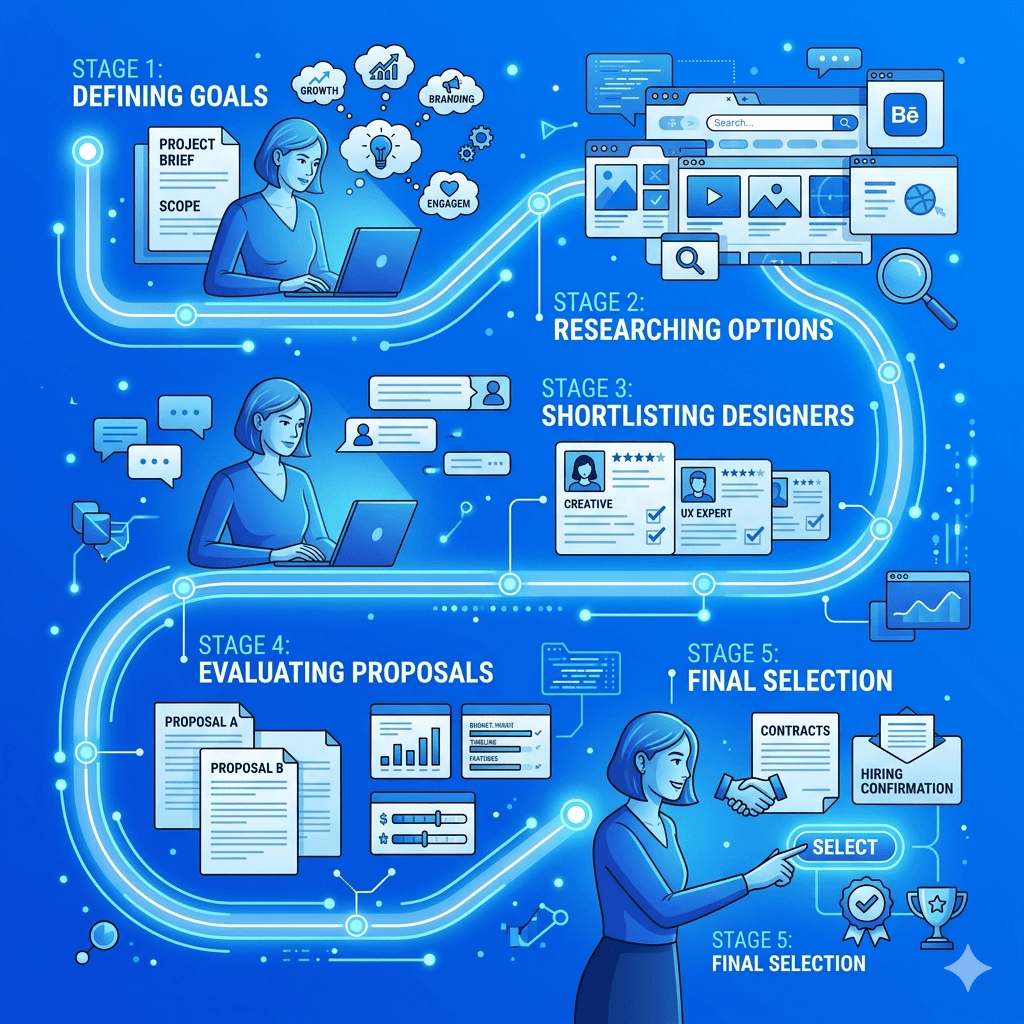
Choosing a web designer is one of the most important business decisions you’ll make this year. Get it wrong, and you’re looking at wasted money, a website that underperforms, and months of frustration. Here’s a clear framework to help you choose designer confidently.
12.1 Define Your Goals and Budget
Before reaching out to anyone, get clear on what you actually need. Are you looking for a simple informational site, a lead-generating business website, or a full e-commerce store? Define your goals in plain terms: more phone calls, more product sales, more bookings. Set a realistic budget range and know which features are must-haves versus nice-to-haves.
12.2 Review Portfolios and Past Work
Every professional web designer in Uganda should have a portfolio. Review it critically. Look for variety, attention to detail, mobile responsiveness, and visual consistency. Ask whether the sites in their portfolio actually rank on Google not just look good. A beautiful site with no SEO value is like a sports car with no engine.
12.3 Check Reviews and Testimonials
Ask for client references and actually contact them. Online reviews on Google Business, social media, or LinkedIn provide independent validation of a designer’s reliability and quality. Be cautious of designers who only show you hand-picked testimonials with no external verification.
12.4 Ask About SEO and Performance
Ask specifically: “How do you build websites for search engine visibility?” and “What steps do you take to ensure fast page load times?” A designer who gives vague answers or dismisses SEO as “something we can do later” is likely to deliver a website that struggles to attract organic traffic.
12.5 Evaluate Communication and Support
Pay attention to how they communicate during the proposal stage. Are they prompt, clear, and professional? Do they ask good questions to understand your business? Also clarify post-launch support: what happens if something breaks? Is ongoing maintenance included or billed separately?
13. Common Mistakes to Avoid When Hiring
Even experienced business owners make predictable mistakes when hiring web designers. Knowing these pitfalls in advance can save you time, money, and serious headaches.
13.1 Choosing Based on Price Alone
Affordable web design in Uganda is available, but the cheapest quote is rarely the best deal. A very low price often signals limited experience, template shortcuts, or corners cut on functionality and SEO. The real cost of a cheap website shows up later in poor performance, security vulnerabilities, or the need to rebuild from scratch within a year. Before comparing prices alone, understand the free vs paid trade-offs in full.
13.2 Ignoring SEO and Mobile Optimization
A website that isn’t mobile-friendly in 2025 is not a professional website, it’s a liability. Similarly, launching without basic SEO is like opening a shop with no signage. Always confirm that your designer builds mobile-first, responsive websites and handles on-page SEO as part of the standard package, not as an add-on.
13.3 Not Defining Project Scope Clearly
Vague project briefs lead to endless revisions, scope creep, delayed launches, and disputed invoices. Before signing anything, make sure the contract specifies the number of pages, required features, revision rounds, delivery timeline, and what happens if either party needs to make changes. Clear scope documentation protects both you and your designer.
14. Tips for Getting the Best Results
Hiring the right designer is only half the battle. How you work with them determines whether the finished product meets your expectations.
14.1 Prepare Clear Requirements
Come to the first meeting with a document that outlines your business goals, target audience, preferred design styles (with examples of websites you like), required pages, and any technical integrations needed. The clearer your brief, the better the output. Designers work best when they have strong direction, not vague mandates.
14.2 Collaborate Effectively
Give feedback promptly and specifically. Instead of saying “I don’t like it,” say “The font feels too formal for our brand” or “The hero image doesn’t reflect our target audience.” Concrete, actionable feedback speeds up the revision process and leads to a better final result. Treat your designer as a creative partner, not just an order taker.
14.3 Plan for Ongoing Maintenance
Your website isn’t a one-time purchase, it’s a living digital asset. Budget for ongoing maintenance including hosting, security updates, content updates, and periodic redesigns. Establish a maintenance agreement with your designer before launch. A neglected website loses rankings, loads slowly, and becomes vulnerable to hacking. Treat website maintenance the same way you’d treat maintaining your office or equipment.
15. Conclusion: Making the Right Choice
Uganda’s web design market is full of talent and the best web designers in Uganda aren’t all in one place. Kampala leads in scale, diversity, and agency-level capability. Entebbe offers niche expertise and personalized service. Jinja brings creativity and affordability for businesses ready to take a chance on emerging talent.
The right choice isn’t about geography alone. It’s about matching your project’s needs, budget, and working style to the right designer wherever they’re located. Use the framework in this article to evaluate your options systematically rather than defaulting to whoever responds first or charges least.
A professional, SEO-optimized, mobile-friendly website is one of the highest-return investments any business in Uganda can make today. Take your time, do your research, and choose a designer who genuinely understands your vision and has the skills to bring it to life.
16. Frequently Asked Questions
16.1 Which city has the most affordable web designers in Uganda?
Jinja generally offers the most affordable web design rates, followed by Entebbe. Kampala has a wider range from budget-friendly freelancers to premium agencies. The key is that affordability varies by individual designer, not just city. Always compare quotes from multiple providers before deciding.
16.2 Are Kampala web designers better than those in Entebbe or Jinja?
Not necessarily. While Kampala has more experienced designers and established agencies, talented professionals exist in all three cities. Entebbe designers often excel in hospitality and lifestyle design. Jinja-based designers frequently bring fresh, modern perspectives. The best approach is to evaluate individual portfolios rather than making location-based assumptions.
16.3 How much does a professional website cost in Uganda?
A basic professional website in Uganda typically costs between UGX 700,000 and UGX 4,000,000, depending on location, complexity, and the provider’s experience level. E-commerce sites, custom designs, and SEO-optimized builds push costs higher. Always ask for a detailed quote and compare what’s included in each package.
16.4 Can I hire a web designer remotely instead of locally?
Yes, and many businesses do. Remote hiring widens your talent pool significantly. However, local designers offer advantages in market knowledge, accountability, and the ability to meet in person. For straightforward projects, remote works well. For complex or brand-sensitive builds, local proximity can be an advantage.
16.5 What should I look for in a web designer’s portfolio?
Look for diversity across industries, mobile responsiveness, fast loading speeds, clean visual design, and evidence that the sites are actually live and functioning. Ask whether any portfolio sites rank well in search results. Also look for relevance. A designer who has built sites similar to your industry is more likely to understand your needs quickly.
16.6 How long does it take to build a website?
A basic business website typically takes 2 to 4 weeks from start to finish. More complex projects e-commerce stores, custom web applications, or sites requiring heavy content creation can take 6 to 12 weeks or longer. Timeline depends heavily on how quickly you provide feedback, content, and approvals.
16.7 Do web designers in Uganda offer SEO services?
Many do, but the depth of SEO knowledge varies widely. Some designers offer basic on-page SEO as part of their standard package. Others work alongside dedicated SEO specialists. When evaluating a designer, ask specifically what SEO deliverables are included and how they measure website performance post-launch.
16.8 Is it better to hire a freelancer or an agency?
It depends on your project scope and working preferences. Freelancers are often more affordable and offer direct, personal communication. Agencies bring team-based expertise, structured processes, and greater capacity for large or ongoing projects. For most small to medium businesses, a skilled freelancer or boutique studio strikes the best balance of cost and quality. For complex, multi-department digital projects, an agency’s structure and accountability are worth the premium.